Youth Participatory Action Research Modules
Phase 1
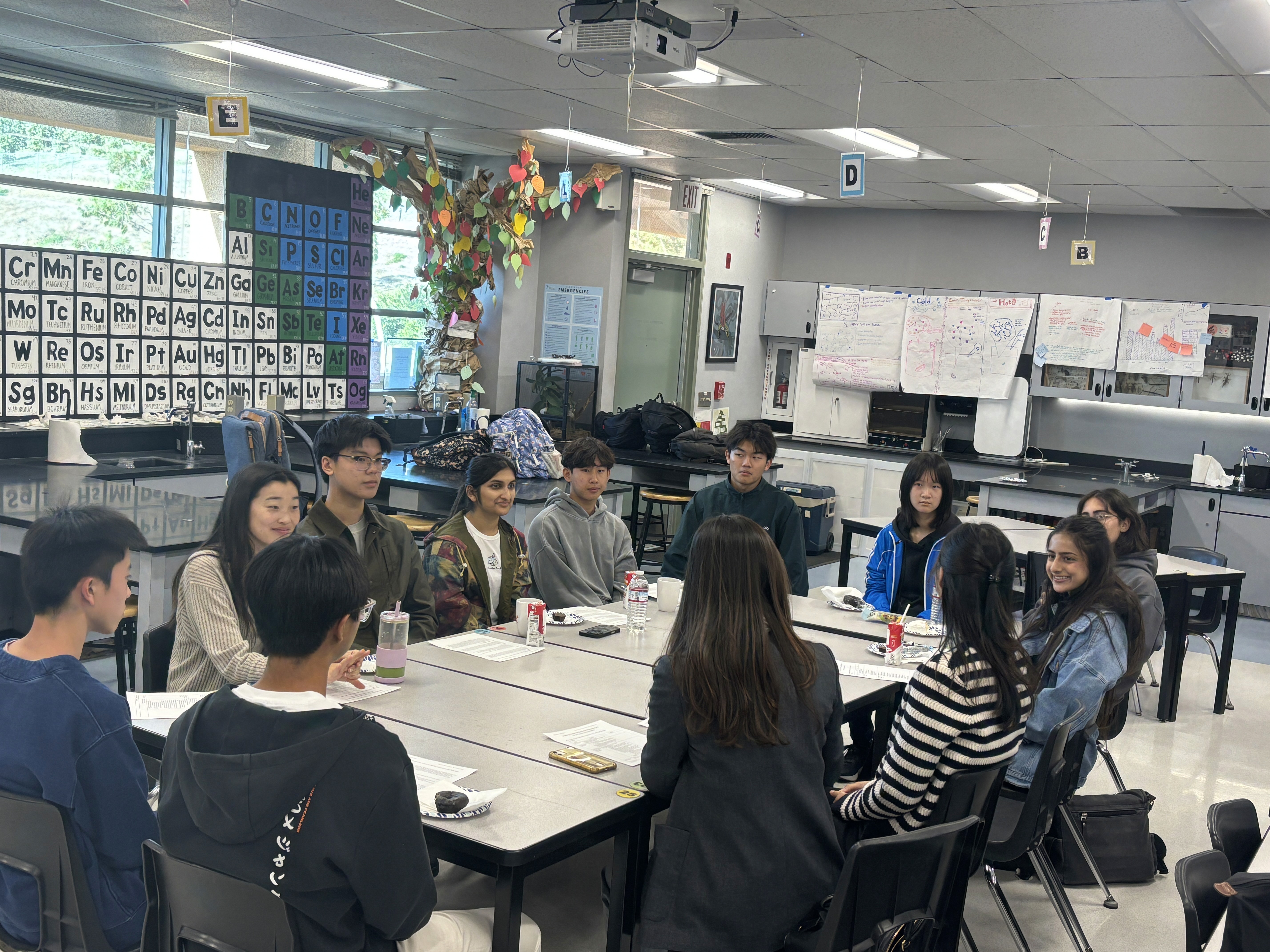
Creating a welcoming community of YouthCARES researchers
Phase 2
Learning and Conducting Research for a Just and Sustainable Future
Phase 3
Communicating Research with Communities
Phase 1 Overview
Module 1: Creating a unified vision and an environment that encourages youth to engage with researchers Module 2: Understanding the Modules and previous findings of the YouthCARES project in order to guide the direction of further research. Module 3: Synthesizing a new research question to explore, stemming from newer ideas and elements from previous years. Module #4: Designing research activities
Phase 2 Overview
Module 1: Understand ethical and professional data collection practices Module 2: Develop an interview protocol and prepare for interviews Module 3: Learn to analyze qualitative data (cleaning, annotating, memoing, coding) Module 4: Identify and synthesize key patterns and findings from coded data
Phase 3 Overview
Module 1: Translate findings into clear, actionable messages Module 2: Develop effective presentation and storytelling Skills Module 3: Reflection and celebration
Phase I: Creating a Welcoming Community of YouthCARES Researchers
Module #1: Create a unified vision and an environment that encourages youth to engage with researchers.
What is this Module about?
This Module aims to foster a working environment that bridges the gap between high schoolers and college students. The team needs to prioritize building trustful relationships to ensure optimal collaboration between researchers.
Activities:
In-person meet and greet
Icebreaker
Co-construct group norms (professionalism, confidentiality)
Provide a paper outline of project Modules and work done in the past
Allow a former YouthCARES student to speak briefly about their experience
Friendship date: Returning members pair up with new members in a small group or paired setting and answer questions that new members may have.
Review a one-pager that explains the purpose and structure of YouthCARES
Story-sharing: Why did (I) join this team? Why do we do what we do together? (Developing sense of community and shared purpose)
Resources:
YouthCARES Overview
Module #2: Understand the Modules and previous findings of the YouthCARES project in order to guide the direction of further research.
What is this Module about?
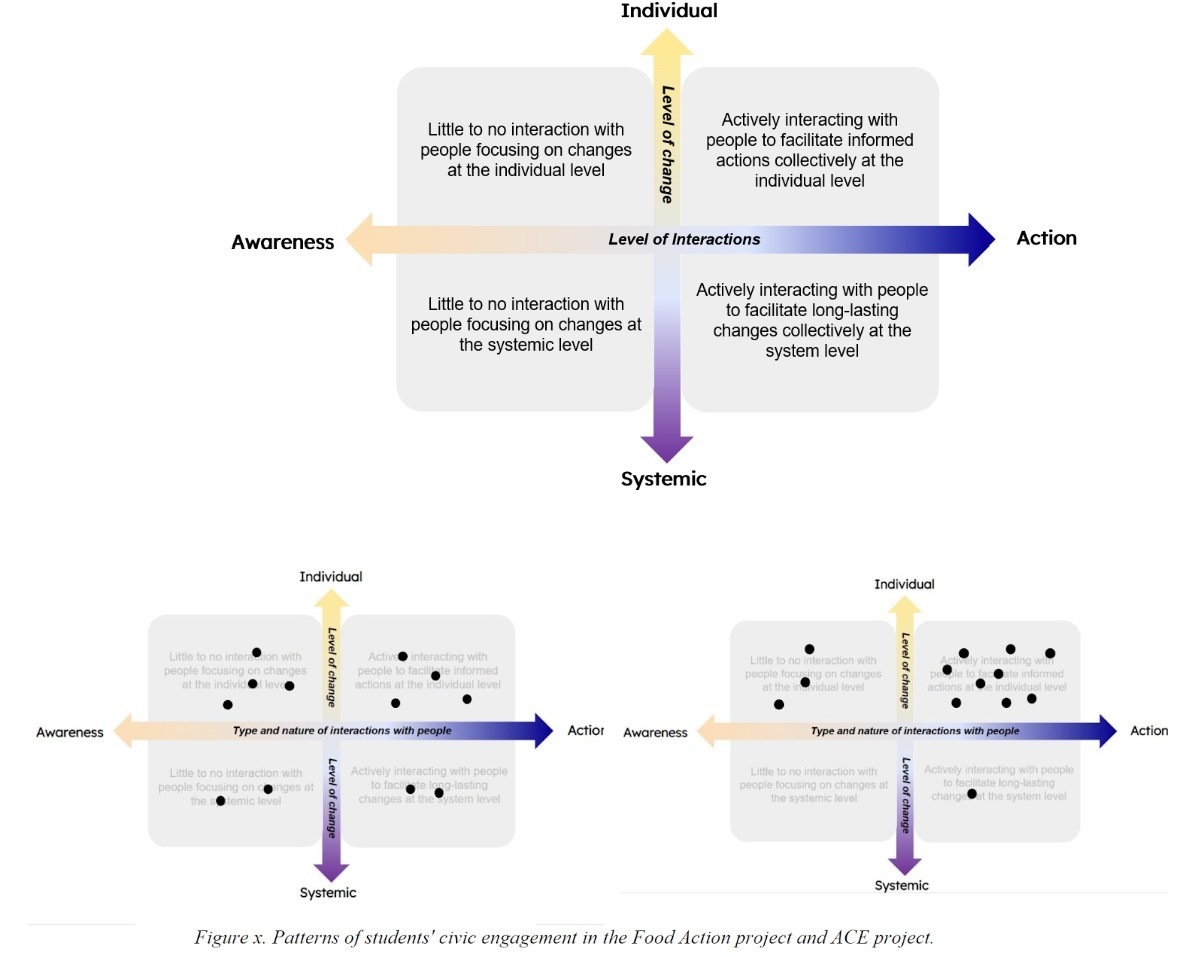
This Module is about fortifying the understanding of newer group members, ensuring they are confident moving forward with the research. While the group is still fresh and work is just beginning, the assignments should put students in a researcher mentality. The students should begin adjusting better to the nature of the group work YouthCARES does.
Activities:
Discussion over a Zoom meeting explaining the steps of research (identifying need/motivation for a project, formulating a question, collecting data, etc.) with examples from past years' YouthCARES work.
Explore artifacts from past cohorts (e.g. student presentations, videos, website)
Outline noticings and wonderings of previous cohorts’ findings
Use those noticings and wonderings to derive key patterns/themes that can identify a direction for the research
Module #3: Collectively decide the direction and focus of the research to explore stemming from newer ideas and elements from previous years
What is this Module about?
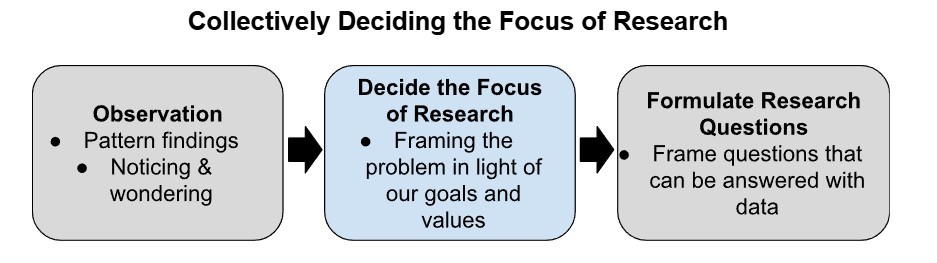
This Module entails developing a direction for the year. A research question needs to be established earlier on, using a culmination of past interests combined with new ideas and wonderings from the group.
Activities:
Discussing past projects, reviewing their findings, and drafting wonderings based on these findings
Establish the criteria for what a research question must contain (ex: how open-ended must it be, does the question outline an independent variable/dependent variable for research, etc.)
Through a meeting of discussion, draft a researchable question
Module #4: Design research activities.
What is this Module about?
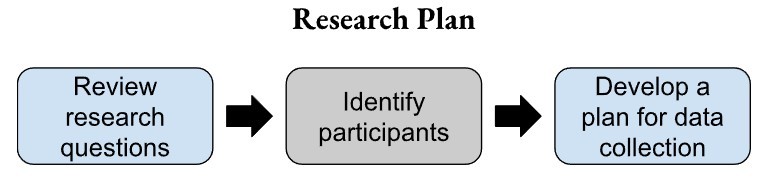
Based on the focus of the research, and tentative research questions generated from the previous module, here we will discuss how to answer our research questions. This involves identifying the kinds of data that we need to collect per each research question and participants (e.g., stakeholders of the focal issues).
Activities:
Review research questions generated from the previous module and brainstorm the types of data that we need to collect in order to answer the questions.
Identify research participants (e.g., potential interviewees) who provide important insights into the issues that we are interested in
Develop a plan for data collection
Resources:
link to top
Phase II: Learning and Conducting Research for A Just and Sustainable Future
Module #5: (Remind) Understand ethical and professional data collection practices
What is this Module about?
This Module ensures that student researchers have the knowledge and skills necessary to conduct interviews ethically and professionally. It ensures that we respect the participants’ rights and privacy, which allows us to create a positive interview experience.
Activities:
Review informed consent and confidentiality (collecting data from human subjects)
Practice obtaining consent to record interviews (Ex: Explaining the purpose of the recording to the interviewee)
Discuss professionalism during interviews (Ex: Actively listening to the interviewee to ensure they feel heard and validated, establishing eye contact, and creating a respectful and comfortable environment, purpose of interview is not evaluate or judge the interviewee’s thoughts, it is to actively listen to them)
Module #6: Develop an interview protocol and prepare for interviews
What is this Module about?
This Module focuses on collaboration between student researchers and mentors to review previous research instruments (e.g., interview protocols) and co-create a clear and effective interview protocol to support high-quality data collection. Before student researchers conduct their own interviews, they will practice interviews with mentors in order to build confidence and gain practical experience.
Activities:
Student researchers and mentors co-create an interview protocol outlining the Module of the project, the purpose of the interview, strategies for a successful interview, the procedure, and the questions
Review and revise the protocol to ensure the data collected will be relevant to answering the research questions
Conducting practice interviews between mentors and student researchers using the established interview protocol
Debrief practice interviews to reflect on student researchers’ experiences, allowing them to identify successes, challenges, and questions before they conduct their own interviews
What went well?
What were the challenges?
What questions do you have?
Module #7: Learn to analyze qualitative data (cleaning, annotating, memoing, coding)
What is this Module about?
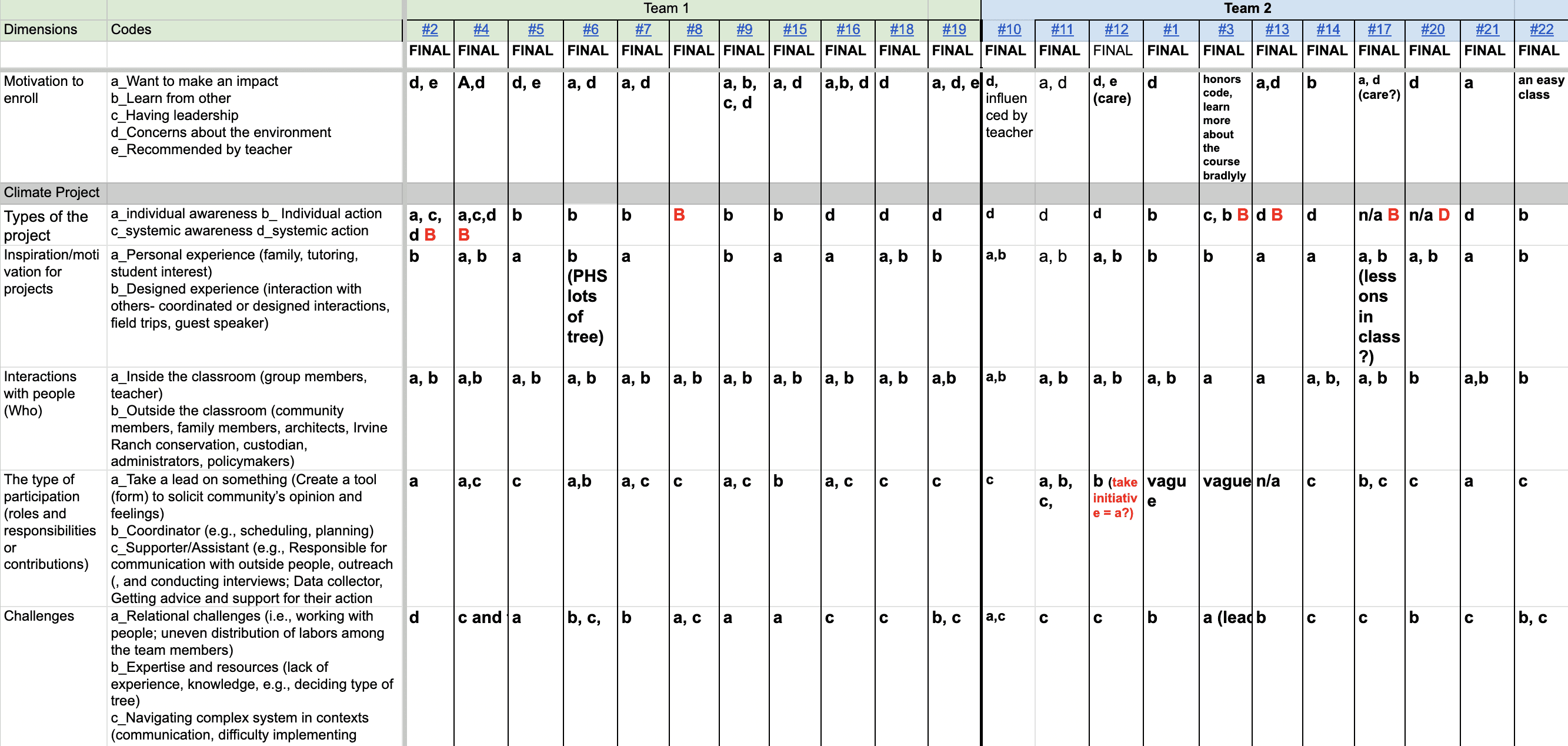
This Module focuses on building student researchers’ skills in analyzing qualitative data. Student researchers will gain experience in generating an interview transcript, cleaning it, annotating it, creating a memo, and applying a coding scheme to it. Then, student researchers and mentors will engage in consensus conversations to ensure the findings are consistent and trustworthy in order to limit potential bias that one would bring when analyzing an interview.
Activities:
Mentors introduce qualitative data analysis techniques (ex: cleaning a transcript, creating a memo, coding)
Student researchers each practice cleaning a transcript and creating a memo, then reflect on their experiences in the next meeting
Assign leads to clean the transcript and generate the memo for each interviewee, and co-leads to review and provide feedback
Create a coding scheme and code transcripts using the coding scheme, revising the coding scheme as needed throughout the coding process
Conduct consensus conversations as a team to ensure intercoder reliability
Module #8: Identify and synthesize key patterns and findings from coded data
What is this Module about?
This Module focuses on guiding student researchers to derive meaningful insights from the coded data in order to answer the research questions. In this way, they are able to convert the raw data into more organized findings that they can begin to use to communicate research with others.
Activities:
Share noticings and discuss patterns from the coded data
Group the ideas to begin to form insights and findings
Reflect on how the findings can answer the research questions (Opportunity to revise research questions if needed)
link to top
Phase III: Learning and Conducting Research for A Just and Sustainable Future
Module #9: Translate Findings into Clear, Actionable Messages
What is this Module about?
This Module focuses on helping student researchers take the patterns and themes they identified during the data analysis phase and convert them into clear, audience-friendly takeaways. Students will learn how to make their research findings understandable and impactful by identifying what matters most to share and why.
Activities:
Review and highlight key findings from the coded data
Draft audience-friendly insights based on the findings
Mentors guide students in converting their findings into plain language, focusing on what would matter most to educators, peers, or community members.
Use discussion prompts like:
“Why should others care about this finding?”
“What could someone do differently because of this insight?”
Create a presentation medium to communicate findings
e.g., presentation slides, videos, and etc.
Module #10: Develop Effective Presentation and Storytelling Skills
What is this Module about?
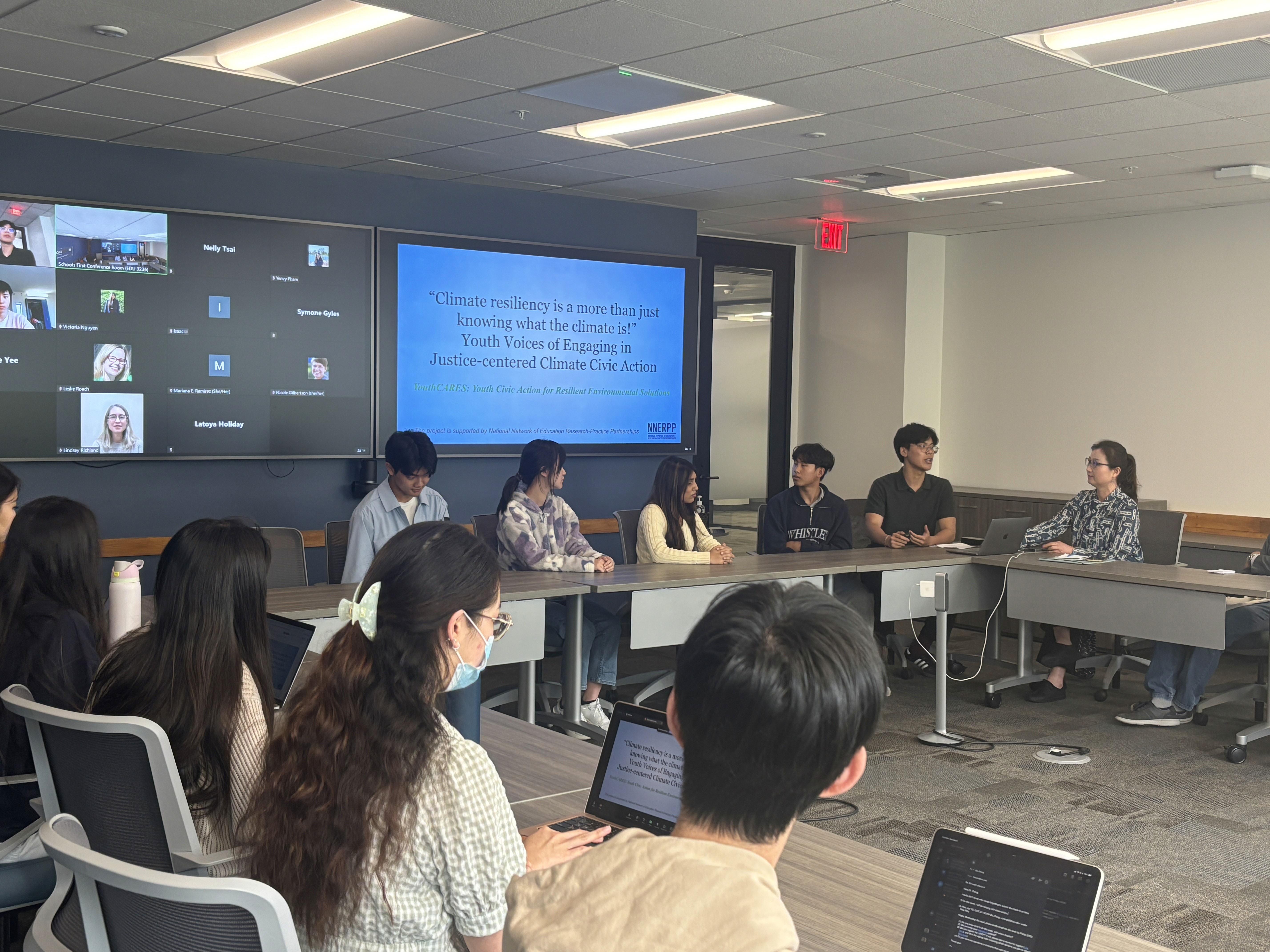
This Module focuses on supporting students to present their research findings in a way that is clear, compelling, and meaningful to an audience.
Activities:
Build and Practice the Presentation
Divide responsibilities across the group based on strengths and interests
They work in their assigned roles (speaker, slide designer, editor, etc.) to build out each segment of the presentation
Practice communicating findings effectively (with proper enunciation, clarity, etc.)
Mock presentation with the entire team
Peers and mentors act as an audience, offering specific feedback on content, flow, delivery, and engagement
Module #11: Reflect and Celebrate
What is this Module about?
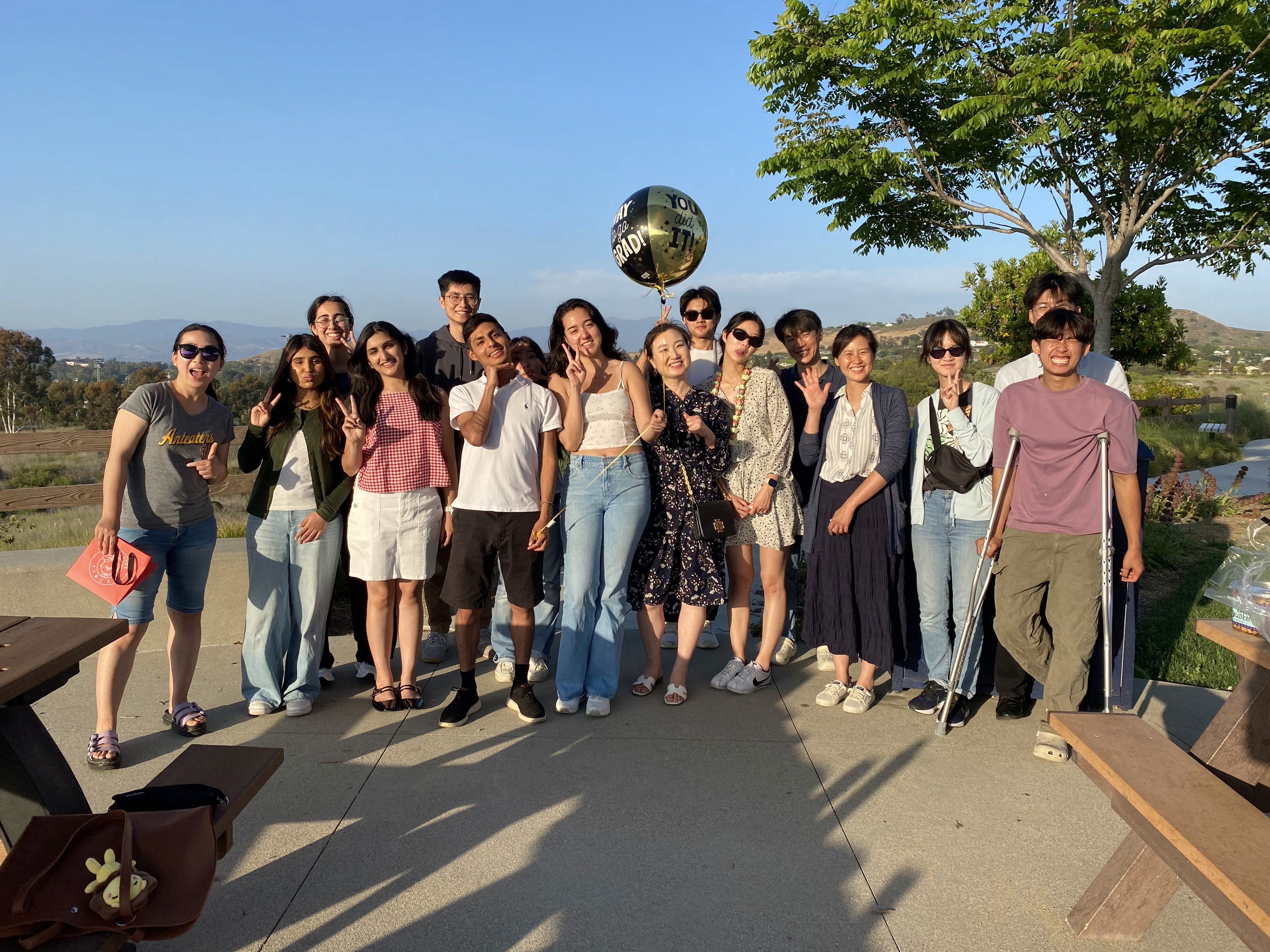
This module aims to allow students to reflect on the work they’ve accomplished as well as celebrate their growth and achievements.
Activities:
Mentors conduct exit interviews with student researchers and allow them to reflect on their experience with this research
Celebration! Students and mentors come together to celebrate the work and recognize the students’ growth and achievements
BBQ/potluck party
link to top

This work is licensed under a Creative Commons Attribution 4.0 License CC BY-NC 4.0
2024-Present
